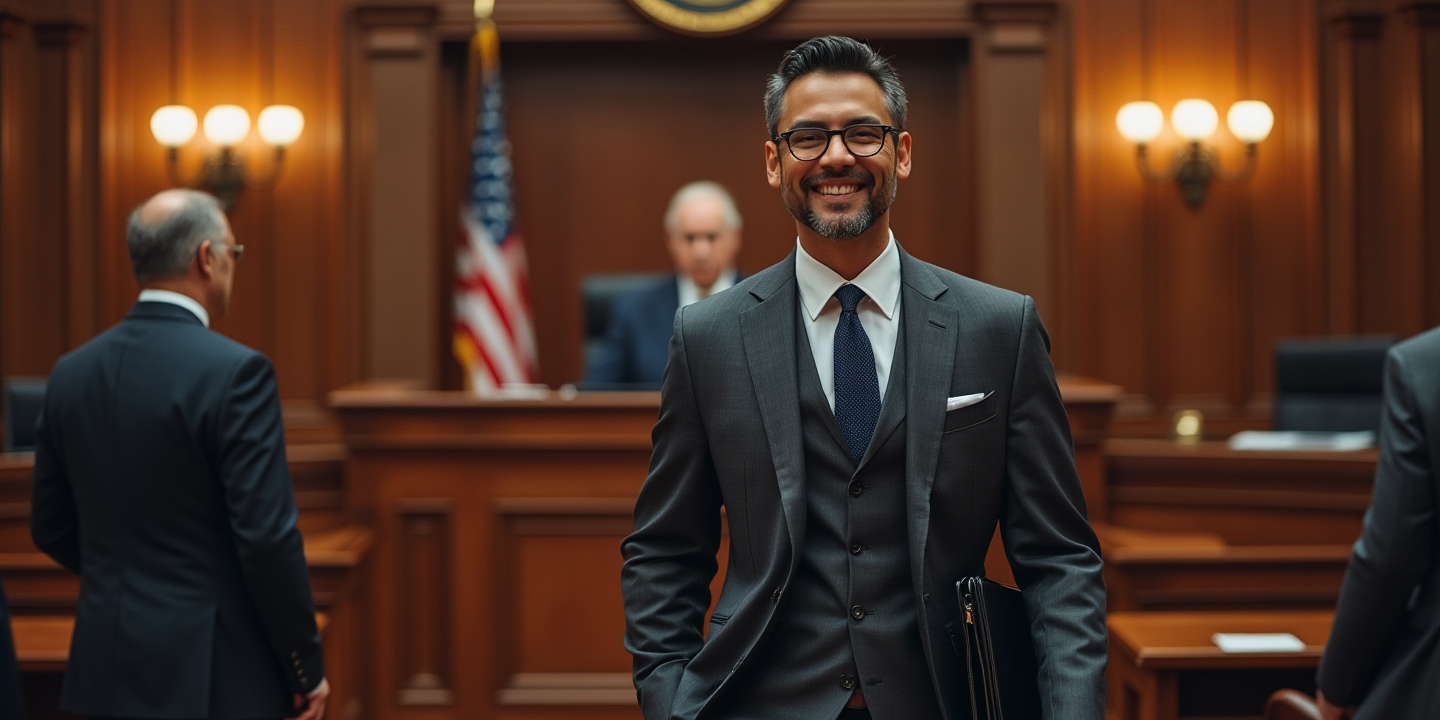
At 8:12 a.m. on a Tuesday, a litigation manager at a mid-size civil firm realized that the associate assigned to a 9:00 case management conference at 400 McAllister Street was still sitting in a deposition in San Jose. The conference was non-appearance-optional. The client was already unhappy about fees. Within four minutes, a San Francisco appearance attorney had accepted the assignment through AppearMe, reviewed the two-page statement, and was walking through the doors of the Civic Center Courthouse. The conference lasted eleven minutes. Nobody at the firm billed a round trip down the 101.
That is the ordinary version of the story, and it describes most coverage assignments in this city. The complications are what deserve attention.
The rule: any attorney licensed in California may stand up and say your client’s name
There is no separate credential for per diem work. A member in good standing with the State Bar of California may appear on behalf of a party in San Francisco Superior Court, state the appearance for the record, and handle whatever the calendar requires. Business and Professions Code section 6125 sets the floor: practice law in this state without active admission and you have committed unauthorized practice. Above that floor, the obligations are the familiar ones. Rule 1.1 of the California Rules of Professional Conduct requires competence. Rule 1.4 requires communication. The covering lawyer owes duties to the client, not merely to the firm that hired the coverage.
So the rule is permissive and the logistics are the hard part. Most of what goes wrong with coverage in this county has nothing to do with licensure.
Exception one: the hearings where remote appearance will not rescue you
Code of Civil Procedure section 367.75 and California Rules of Court rule 3.672 opened the door to remote appearances in civil proceedings, and many departments now default to video for routine matters. Firms outside the Bay Area have read that development as the end of per diem coverage. It is not.
Judges retain discretion to require physical presence, and they exercise it. Evidentiary hearings, contested motions where the court anticipates argument on a developing record, trial-setting conferences in complex matters, settlement conferences where the bench officer wants the parties in the room: these routinely draw an order for in-person appearance. The notice sometimes arrives days before the date. A firm in Sacramento or Fresno that planned on Zoom and then receives a personal-appearance order has two choices, and one of them is a six-hour round trip. Engaging a local San Francisco appearance attorney at that point is the cheaper option by a wide margin, and the one that preserves the associate’s billable day.
There is a second, quieter failure mode. Remote appearance platforms drop. Audio fails. Counsel gets stuck in a virtual waiting room while the matter is called and dropped from the calendar. Coverage on the ground does not have that problem.
Exception two: criminal calendars and the limits of per diem coverage
Criminal matters at the Hall of Justice on Bryant Street operate under different constraints, and anyone hiring coverage for them should understand the line. Penal Code section 977 governs when a defendant must personally appear and when counsel may appear on the defendant’s behalf, and the distinctions between misdemeanor and felony proceedings matter. A properly executed waiver permits counsel to handle many misdemeanor appearances. Felony arraignments, plea entry, and sentencing are a different category.
Coverage counsel on a criminal calendar is appropriate for continuances, pretrial conferences where the position is already set, status dates, and calendar calls. It is not appropriate for substantive negotiation with the district attorney’s office unless the retained lawyer has delegated that authority in writing and briefed the covering attorney thoroughly. A defendant who expected a long-standing relationship with a local criminal defense lawyer San Francisco clients trust, and who instead meets a stranger on the morning of a plea, has a legitimate grievance. Say so in advance, in writing, and the arrangement works.
The practical workaround used by experienced defense practitioners: send coverage for the procedural dates, appear personally for anything touching the disposition. That division keeps the calendar clean without eroding the client relationship.
Exception three: the hearing that looks routine and is not
A demurrer hearing on a tentative ruling is ordinarily a ten-minute matter. Submit on the tentative, collect the order, leave. But a tentative that grants leave to amend in part, or that invites argument on a single cause of action, converts the hearing into something that requires judgment about the record and about the client’s appetite for amendment.
This is where the hiring firm’s preparation determines the outcome. A covering attorney who receives the tentative, the operative pleading, and two sentences on the client’s position will handle it. One who receives a department number and a case name will submit on the tentative and hope. Experienced per diem counsel asks for more. Firms that treat appearance coverage as a document-transmission exercise rather than a staffing decision get worse results, and then blame the model.
What this city’s geography does to your timeline
Civic Center parking is scarce and expensive, Bryant Street parking is worse, and a lawyer coming from the Peninsula during the morning commute cannot reliably predict arrival within thirty minutes. An attorney who already works these courthouses walks from a BART station and knows which department clerk calls the line-ups early. The density of the local bar is an asset here: in San Francisco, coverage is frequently confirmed in under a minute, and firms regularly secure an appearance attorney five to ten minutes before a hearing is called.
Comparing the three ways firms handle a conflict date
The side-by-side comparison is unflattering to the traditional options.
|
Approach |
Time to secure coverage |
Cost exposure |
Works under 24 hours’ notice |
|---|---|---|---|
|
Send a firm associate |
Immediate, if one is free |
Full billable day plus travel |
Only by cancelling other work |
|
Call colleagues and agencies individually |
Hours to days of staff time |
Appearance fee plus administrative hours |
Rarely |
|
On-demand network such as AppearMe |
Often under one minute locally |
Flat appearance fee, no travel |
Yes, including same-morning requests |
What to send before the appearance attorney leaves for court
Four items, sent together, prevent nearly every coverage problem worth worrying about.
-
The case caption, number, department, and calendar time, plus the tentative ruling if one has posted.
-
A written statement of authority: what the covering lawyer may agree to, and what must be continued or taken under submission.
-
The operative pleading or motion papers, not a summary of them.
-
A mobile number answered during the calendar, because the bench officer will ask something nobody anticipated.
The question to ask before you confirm the assignment
Ask the network or the covering lawyer this: what happens if the matter is continued, consolidated, or sent to a different department after it is called? The answer reveals whether you have hired a warm body or a practitioner. Competent per diem counsel will tell you they will take the new date, confirm whether the court wants a written stipulation, request the clerk’s minute order, and report back the same day. On AppearMe, the appearance report and the payment both land that day, which means the hiring firm can bill the client while the detail is still fresh. Firms that build that single question into their coverage checklist stop being surprised by what comes back from court.
Conflicts and confidentiality: the five-minute check that protects both firms
A special appearance creates a lawyer-client relationship, however brief. That has three practical consequences most hiring firms skip past when the calendar date is tomorrow. First, the covering attorney owes the client a duty of competence under the California Rules of Professional Conduct, which means they are entitled to refuse an assignment they cannot handle on the materials provided. Second, the hiring firm is sharing confidential client information, so the transfer should go through a secure channel rather than a forwarded personal email thread. Third, a conflicts check has to happen on the covering lawyer’s end before the file moves, not after.
In a legal market as concentrated as San Francisco’s, conflicts are not hypothetical. The same thirty or forty firms appear opposite each other in Civic Center law and motion departments week after week. A sensible intake exchange covers:
-
Full party names, including parent entities, insurers, and any cross-defendants added since the original complaint.
-
Opposing counsel’s firm, since the covering attorney may have an of-counsel or contract relationship that is not obvious from the State Bar record.
-
Whether the client has consented, in the engagement agreement or separately, to the use of outside appearance counsel.
-
Who is responsible for notifying the court — in most civil appearances no substitution of attorney is filed, and the covering lawyer simply states on the record that they are specially appearing for counsel of record.
What coverage actually costs, and how to bill it
The economics are the reason per diem coverage spread from insurance defense into general civil and family practice. A flat appearance fee is a known number before the hearing; an associate’s morning is not. Send a mid-level associate from a downtown office to 400 McAllister for a 9:00 a.m. Case management conference and the firm absorbs the walk, the security line, the wait while the court works through a thirty-matter calendar, and the walk back — frequently three billable hours for a two-minute appearance that produces a trial-setting date.
Billing practice varies, and it is worth settling before the invoice arrives. Some firms pass the appearance fee through to the client as a disbursement, supported by the appearance report and the clerk’s minute order. Others treat it as overhead and bill the client only for the attorney time spent preparing the covering lawyer, which is usually a fraction of an hour. Either approach is defensible; what is not defensible is billing the client an associate rate for hours the firm never incurred. Hourly clients, particularly institutional ones with outside counsel guidelines, increasingly require disclosure when a hearing is covered by someone outside the firm, and several guidelines cap what can be charged for routine status conferences.
Building a bench instead of hiring a stranger each time
The firms that get the most out of a San Francisco appearance attorney arrangement stop treating each assignment as a one-off. They note which covering lawyers reported back clearly, which ones knew the department’s tentative ruling practice without being told, and which ones handled an unexpected order to show cause without calling for instructions. Over a year that produces a short list — a local criminal defense lawyer San Francisco firms can send to Bryant Street on two hours’ notice, a civil practitioner comfortable in law and motion, someone who handles family law calendars — and the preparation packet shrinks each time because the covering attorney already knows how the firm works.


